When I started working with machine learning models back in 2017, the biggest challenge was simply getting the hardware to run the code. You would spend weeks tuning drivers, managing memory, and wrestling with frameworks that barely supported the GPU you had. Fast forward to today, and the landscape has shifted dramatically. Organizations are deploying AI at scale, but the complexity hasn't disappeared — it has just moved up the stack. That is why choosing a trusted AI partner matters more than ever.
In the early days, I worked with small teams that treated AI infrastructure as an afterthought. They would buy a couple of consumer-grade GPUs, load up TensorFlow, and hope for the best. It worked for prototyping, but production was a different story. Training a large language model (LLM) on that setup took weeks, and inference latency was a nightmare. The shift to production-grade AI demands a fundamentally different approach. You need a partner that understands not just the software stack but also the hardware, the data center constraints, and the long-term roadmap.
What Makes a Partner Trustworthy in AI
A trusted AI partner does not just sell you a box of chips. They help you design a system that balances performance, cost, and power efficiency. I have seen too many projects stall because the team picked a GPU that was overkill for inference but underpowered for training, or vice versa. A good partner helps you map your workload — whether it is deep learning, high-performance computing, or edge computing — to the right hardware. They ask questions about your data pipeline, your model architecture, and your latency requirements. They do not assume that one size fits all.
For example, AMD has been making a strong push into the AI space with its Instinct accelerators and ROCm software stack. These are not just chips; they are part of a broader ecosystem that includes open source tools, optimized libraries, and a commitment to interoperability. When you work with a vendor like that, you are not locked into a closed platform. You can mix and match CPUs, GPUs, and even FPGAs depending on the job. That flexibility is critical in a field where workloads change every few months.
The Hardware Landscape: CPU, GPU, and Beyond
Most people think of AI hardware as synonymous with GPUs. And yes, NVIDIA dominates the training market with its CUDA ecosystem. But the reality is more nuanced. Inference, especially at the edge, often benefits from CPUs with strong vector processing or from adaptive computing devices like FPGAs. AMD's Zen architecture, for instance, powers EPYC CPUs that are increasingly used in cloud computing environments for both traditional workloads and AI inference. The key is understanding the trade-offs.
Training a large model demands massive parallel compute, which is where GPUs like the Instinct MI300X shine. But once the model is trained, inference can be done on a range of hardware. A trusted AI partner will help you decide whether to run inference on a GPU, a CPU, or a specialized accelerator based on your latency and cost targets. I recall a project where we moved inference from a high-end GPU to an AMD EPYC CPU and cut costs by 60% while still meeting the response time requirements. That kind of optimization is not possible without deep hardware knowledge.

Data Center Considerations
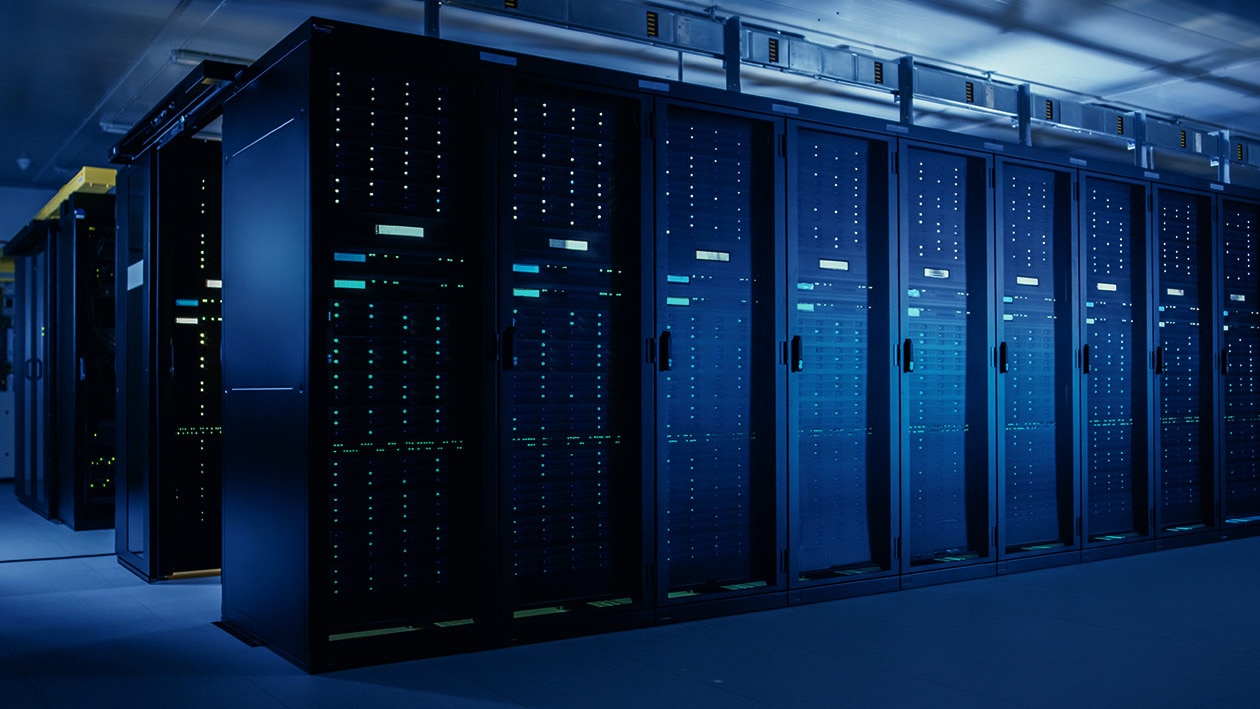
When you scale AI to production, the data center becomes a critical part of the equation. Power density, cooling, and networking all matter. A trusted AI partner helps you design a cluster that does not melt your power budget or create thermal hotspots. I have been in data centers where the GPU racks were so power-hungry that the facility had to upgrade its entire electrical system. That is an expensive lesson to learn after the fact.
AMD's data center strategy has been to focus on efficiency and openness. Their EPYC CPUs offer high core counts with lower power draw compared to some Intel Xeon counterparts, and their Instinct GPUs use a platform that supports open standards like ROCm. For organizations that run mixed workloads — some AI, some traditional high-performance computing — this flexibility is a big deal. You can run your machine learning training on the same cluster that handles your simulation workloads, without having to maintain separate stacks.
The Software Stack: ROCm, Open Source, and Ecosystem
Software is where the rubber meets the road. No matter how good the hardware is, if the software stack is brittle, your project will suffer. AMD's ROCm is an open source platform for GPU computing that supports popular frameworks like PyTorch and TensorFlow. In my experience, ROCm has matured significantly over the last few years. Early versions were rough around the edges, but the current releases are stable and performant for most workloads.
The open source nature of ROCm matters because it gives you control. You are not dependent on a single vendor's proprietary drivers and libraries. If something breaks, you can dig into the source code and fix it. That is a level of transparency that many organizations value, especially in regulated industries like finance or healthcare. A trusted AI partner will advocate for open standards and help you avoid vendor lock-in.
Of course, NVIDIA still has a massive advantage in software maturity with CUDA and its ecosystem of libraries like cuDNN and TensorRT. But the gap is narrowing. For many workloads, especially inference and edge deployments, ROCm is a viable alternative. And for organizations that prioritize openness, it is often the better choice.
Edge Computing and Inference at Scale
Not all AI happens in a data center. Edge computing is growing fast, driven by applications in autonomous vehicles, industrial IoT, and smart retail. At the edge, power and space are limited, so you need hardware that is efficient and reliable. Adaptive computing devices like FPGAs and AMD's Ryzen embedded processors are popular choices. They offer deterministic performance and low latency, which is critical for real-time inference.
I worked on a project where we deployed an object detection model on a fleet of drones for agricultural monitoring. The drones had limited battery life, so we had to optimize the inference pipeline aggressively. We ended up using an FPGA-based accelerator from AMD's ecosystem, which gave us the performance we needed at a fraction of the power draw of a conventional GPU. That kind of tailored solution is exactly what a trusted AI partner can provide.
Competition and Collaboration: AMD, NVIDIA, Intel
It would be disingenuous to talk about AI hardware without mentioning the competitive dynamics. NVIDIA is the incumbent, with a dominant position in both training and inference. Intel is investing heavily in its Gaudi accelerators and Habana Labs technology. AMD has been gaining ground with its Instinct line and the acquisition of Xilinx, which brought FPGA capabilities into the fold.
Competition is good for the industry. It drives innovation and keeps prices in check. But for the end user, it also creates confusion. Each vendor has its own software stack, its own performance benchmarks, and its own marketing spin. That is where a trusted AI partner becomes indispensable. They can cut through the noise and recommend a solution that actually fits your specific needs, rather than what a vendor wants to sell you.
I have seen organizations waste months evaluating hardware on their own, only to end up with a suboptimal configuration. Working with a partner who has hands-on experience with multiple platforms saves time and money. They can run your actual models on different hardware, measure real-world performance, and give you an honest assessment. That is worth far more than any spec sheet.
Looking Ahead: LLMs, Inference, and the Future
The rise of large language models (LLMs) has changed the AI landscape yet again. These models are huge, often requiring hundreds of gigabytes of memory just to load the parameters. Training them is a massive undertaking that demands clusters of high-end GPUs. But inference is where most organizations will spend their money. Every time a user queries an LLM, it runs an inference pass. Over millions of users, that cost adds up.
Optimizing inference is going to be a major focus in the next few years. Techniques like quantization, pruning, and knowledge distillation help, but hardware still matters. A trusted AI partner will help you evaluate trade-offs between latency, throughput, and cost. They might recommend using a mix of GPUs and CPUs, or deploying specialized inference accelerators, depending on your workload.
The relationship with a vendor like AMD, Intel, or NVIDIA is part of the equation, but the partner is the one who integrates everything. They bring together the hardware, the software, and the expertise to make your AI project successful. In a field that changes as fast as AI, that kind of support is not a luxury — it is a necessity.
So whether you are building a recommendation engine, a computer vision system, or a conversational agent, do not go it alone. Find a trusted AI partner who understands the full stack, from the data center to the edge. It will save you headaches, money, and time. And in this industry, time is the one resource you cannot buy more of.